
Begin a Carolina Forest Residents Directory Search
Carolina Forest has no city clerk, city archive, or municipal court of its own. It is a late-1990s planned community in unincorporated Horry County. That makes the County’s land, deed, court, elections, library, and archives channels the practical starting points. The most useful first record depends on what is already known. Use a full street address for a parcel question. Use a full name and an approximate date for a recorded document or court matter. Use an old address, legal description, or nearby locality when researching a family from before Carolina Forest was developed.
Each result has a narrow meaning. A tax record identifies an owner of record and property context. A deed identifies parties to a recorded transaction. An old directory or newspaper can place a household in a period. None is a complete roster of everyone at an address. Keep the record date beside every note, because a name on a deed, an address on a mailing field, and a later court entry may describe different moments.
- Stabilize the address with the County parcel route and write down the tax map number, lot, subdivision, and legal description when available.
- Use the owner name in the Register of Deeds index and compare the document date, book and page, and legal description.
- For a person’s own registration question, use the state voter verification channel rather than treating it as a public street list.
- For an earlier household, ask HCML or the Archives Center for the appropriate nearby directory, newspaper, or land material.
- When a source is restricted or unavailable online, ask the actual custodian for its counter, mail, or formal request route.
Note: Carolina Forest research usually begins with Horry County because the community does not have a separate municipal records custodian.
Carolina Forest Resident Records Offices
Three Horry County offices anchor most current record work. The Register of Deeds keeps recorded instruments. Taxpayer and assessor channels connect a property to County tax context. Voter Registration and Elections handles local election administration and directs people to state registration tools. The offices are distinct, so a document request should go to the office that owns the record rather than to a general County inbox.
Horry County Register of Deeds
1301 Second Avenue
Conway, SC 29526
843-915-5430
Horry County Assessor
Property address changes
Horry County, SC
843-915-5040
Land Records account access
Voter Registration and Elections
1515 Fourth Avenue
Conway, SC 29526
843-915-5440
The Register of Deeds and Clerk both operate at 1301 Second Avenue, but their records are not interchangeable. A court case belongs with the matching Clerk division, while deeds, plats, and restrictions use the Register of Deeds process. The County’s Public Information office can explain County FOIA procedures, but it is not the channel for an existing recorded instrument or a certified court file.
Carolina Forest Property Access Changed in 2026
Horry County changed the online route for property-address information in March 2026. Land Records, GIS, and Tax & Assessor applications now require a free County user account. The unauthenticated Land Records screen exposes registration and sign-in controls, not a public parcel-card field list. Register for the account before expecting an address or owner search to open. If the online route cannot answer the question, contact the Assessor or County IT/GIS, visit the appropriate counter, or request a specific nonexempt County administrative record.
The change affects online access, not the meaning of a parcel. County parcel mapping is for taxing purposes and is not a survey. A map point can be a valuable lead, but a legal boundary conclusion needs the recorded plat, legal description, survey, or qualified professional review. Tax notices also go to the owner-of-record address on file, which may be a mailing address rather than the property’s physical address.
The County’s March 2026 access notice shows the change that affects Carolina Forest address research.
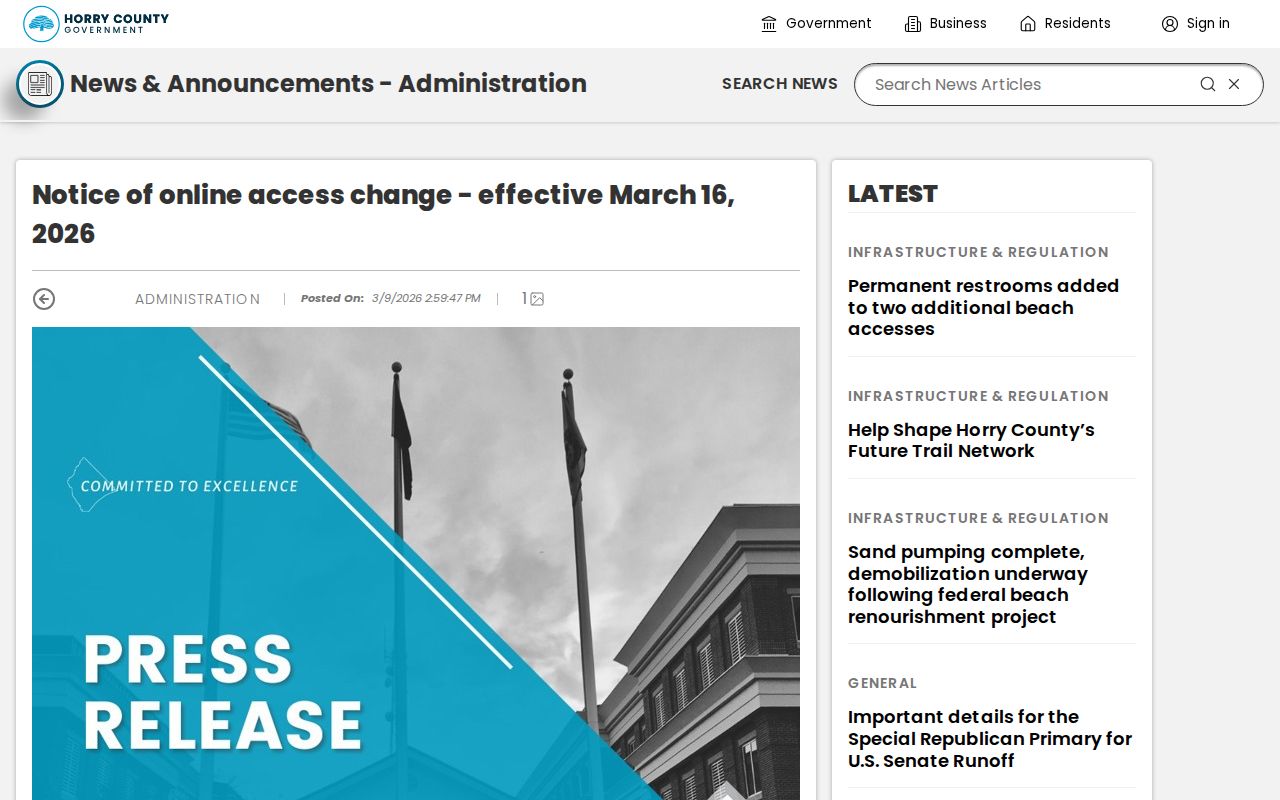
That notice is a reminder to record both the source and the access date when comparing parcel information.
Trace Carolina Forest Names Through Horry Deeds
The Acclaim Official Records system is Horry County’s recorded-document starting point. Its Name Search supports grantor and grantee roles, along with book and page, legal description, document type, consideration, and record-date routes. A grantee receives an interest in an instrument; a later conveyance often makes that former owner the grantor. Match the legal-description memo, book and page, document type, and date before connecting an entry to a Carolina Forest parcel.
The County copy-request form supplies the defensible online name-search assurance: documents indexed under a name since 1984. The interface can accept an earlier date, but that control does not prove complete online coverage before 1984. Use the Register of Deeds counter, its copy-request process, Horry County Archives Center microfilm, and state archival guidance for an older trail. The name format is also practical: the County form says to enter last name, first name, with no punctuation, and the portal asks users to try plausible spelling variations.
| Acclaim field | How it helps a Carolina Forest search |
|---|---|
| Show Names | Choose all parties, grantor, or grantee for a transfer trail. |
| Name | Required field; use last name, first name and test spelling variants. |
| Date range | Focus the result set, while treating 1984 as the documented online-name baseline. |
| Document type | Separate deeds, plats, restrictions, liens, and other recorded instruments. |
| Legal description | Check that a named record belongs to the intended lot or parcel. |
The Acclaim Name Search displays the grantor-grantee route used for this Carolina Forest residents directory trail.
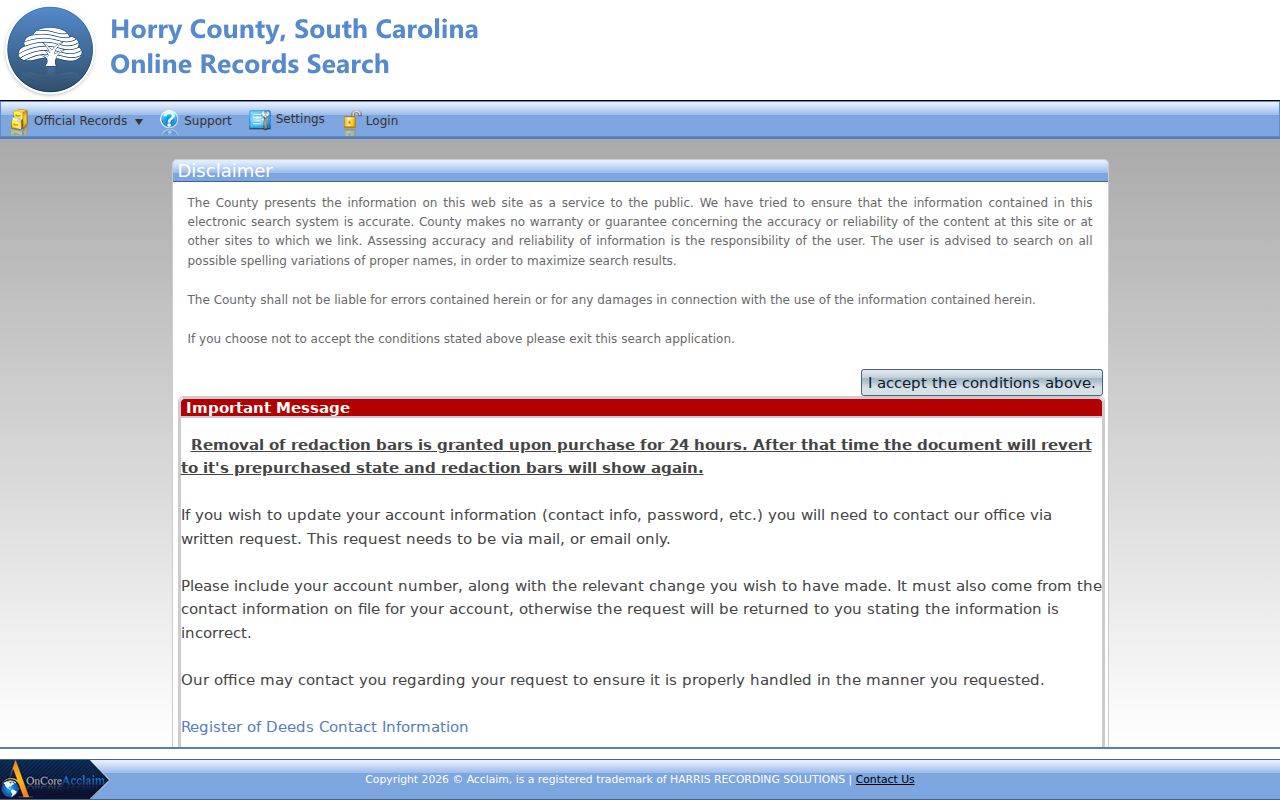
Use the result grid as an index, then confirm the instrument and parcel details before drawing a conclusion.
Current Carolina Forest Resident Directory Sources
No single current Carolina Forest residents directory names every household. The sources below are useful because each answers a limited question. Property and deed records are most useful for ownership and recorded transactions. Elections tools have their own identity, eligibility, and use rules. Institutional and civic sources can confirm a public role or provide community context, but the research did not find a public Carolina Forest household roster.
| Source | What it can confirm | Custodian | Access boundary |
|---|---|---|---|
| Land Records / GIS | County parcel and owner-of-record context | Horry County | Free County account required for property-address views. |
| Acclaim Official Records | Recorded parties, document dates, and legal descriptions | Register of Deeds | Name-search assurance since 1984; older route needs records-office or archival help. |
| MySCVotes | A voter’s own registration information | South Carolina Election Commission | Personal authentication, not a by-street public browse. |
| Public Index | Horry court docket information | South Carolina Judicial Branch | Not a certified file and not an address directory. |
| CFCA public pages | Civic organization and public business context | Carolina Forest Civic Association | Member area is separate; no public household roster was found. |
A name that appears in one source still needs a second, independent record. For a person-centered method, use the Carolina Forest resident lookup route after identifying the kind of fact that needs confirmation.
Check Carolina Forest Voter Information Carefully
MySCVotes is an individual verification tool. It requires County, first name, last name, date of birth, and the last four digits of Social Security number. Select Horry County for a Carolina Forest voter. Those fields are for the voter’s own authenticated check and should not be repeated or sought as directory data. South Carolina does not register voters by political party, and a result should not be used to infer a household relationship.
Official registration records have a separate public-inspection framework under S.C. Code § 7-5-410. The state’s official-list ordering route has requester eligibility, secure-login, filter, price, and use limits. It is not a substitute for a public street list. A missing result may reflect changed registration, different entered information, another County, protection, or an access limit.
The MySCVotes login is the official screen for a voter’s own Carolina Forest registration check.
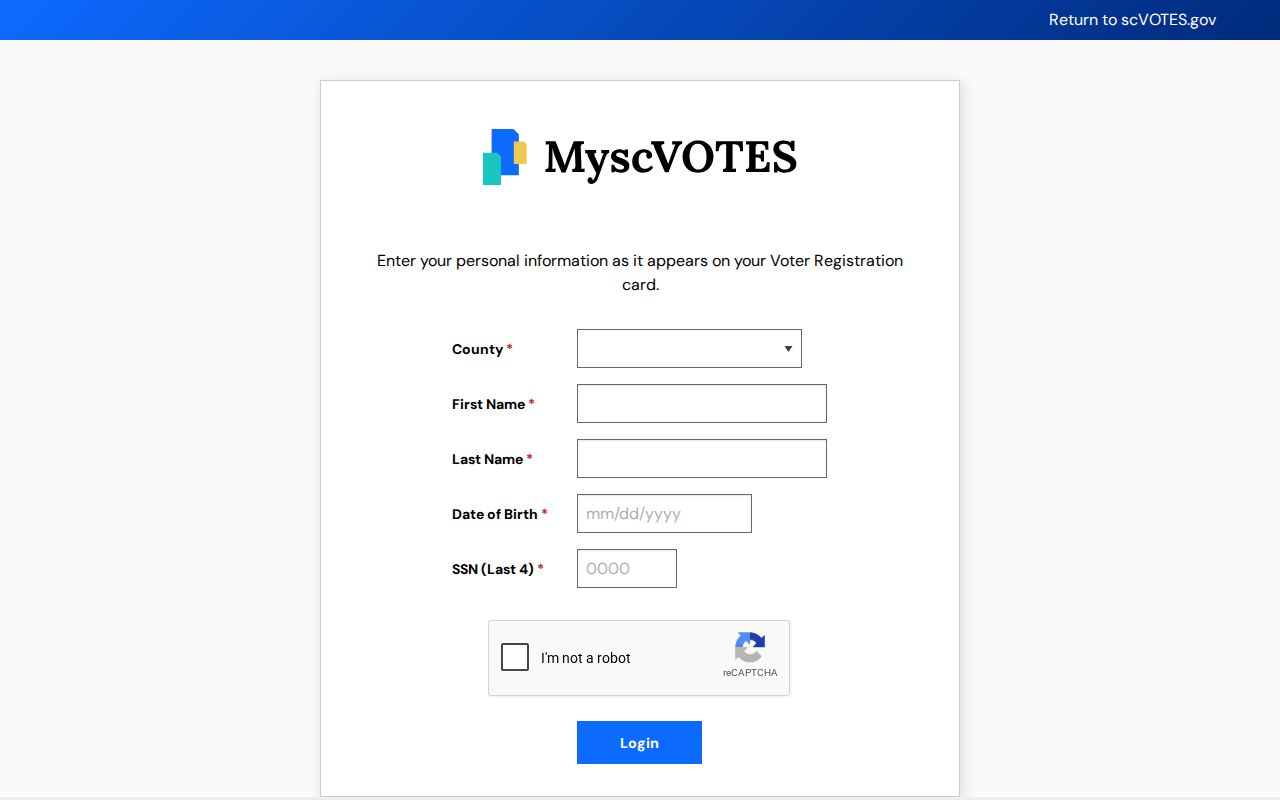
Use the County elections office when a voter needs to correct or reconcile their own registration information.
Read Carolina Forest Court Results Narrowly
Carolina Forest is served by the Fifteenth Judicial Circuit in Horry County. The South Carolina Judicial Branch Public Index is the court-record starting point after choosing the Horry route, accepting the portal notice, and completing its security steps. Search criteria documented by the court include case number, name or business, court type, court agency, case type, action type, and a date range. Cookies, JavaScript, and sometimes a pop-up exception are part of the access path.
A docket result can show parties, court agency, actions, case type, dates, status or disposition, and sometimes enabled financial or document information. It is not a certified case file. Since January 1, 2026, home addresses are not displayed for new or existing Public Index cases. Use the case number and the correct Clerk division when a permitted copy or certified file is needed. A name match cannot establish that the person in the record is the person at a Carolina Forest address.
Note: A court record can be sealed, expunged, juvenile, adoption-related, or otherwise restricted even when a name search finds no result.
Carolina Forest Records Terms That Matter
Small label differences prevent large errors. County systems may show a mailing address, a situs address, a parcel number, and a legal description for the same land. They are not interchangeable. The legal description and recorded plat usually give the most stable bridge back through a planned subdivision. A directory or newspaper may add household context, but it should be cited with its date and compared to the deed or parcel trail.
- Roll
- A list or record set maintained for a particular public function, such as taxes or voter registration.
- Index
- A searchable pointer to a record, not necessarily the record image or a certified copy.
- Parcel
- A taxing unit of land identified in County property systems; it is not a survey conclusion.
- Criss-cross directory
- An address-oriented directory format. No verified Horry County year range was captured, so ask the library about a specific volume.
- Situs address
- The physical property address, which can differ from the owner’s mailing address.
Do not call a mailed-to address a residence without independent confirmation. The same caution applies to an entity, trust, or family name in a property field. It can identify a record relationship without identifying everyone who lives at a location.
Carolina Forest Records Have Several Access Paths
Online search is only one route. The Register of Deeds accepts a separate copy-request process for recorded instruments. Its office and mail channels matter when a document lies outside the documented online-name period or needs a regular or certified copy. Court files use the appropriate Clerk division. The Carolina Forest Library can refer a historical question into HCML collections, the Thompson Heritage and Research Library in Conway, or the Horry County Archives Center. A focused County request can be appropriate for a County administrative record that does not have a public search screen.
South Carolina’s Freedom of Information Act, S.C. Code Ann. § 30-4-10 et seq., sets the general access framework for public bodies subject to exemptions. Horry County reports a written-request determination timeline of 10 business days for records no more than 24 months old and 20 business days for older records. Production timing, deposits, exemptions, and actual costs also matter. The published County fee information is useful for planning, but deeds, court files, and vital records use their own custodian routes.
The Horry County FOIA page explains the County path and distinguishes it from the Register of Deeds copy process.
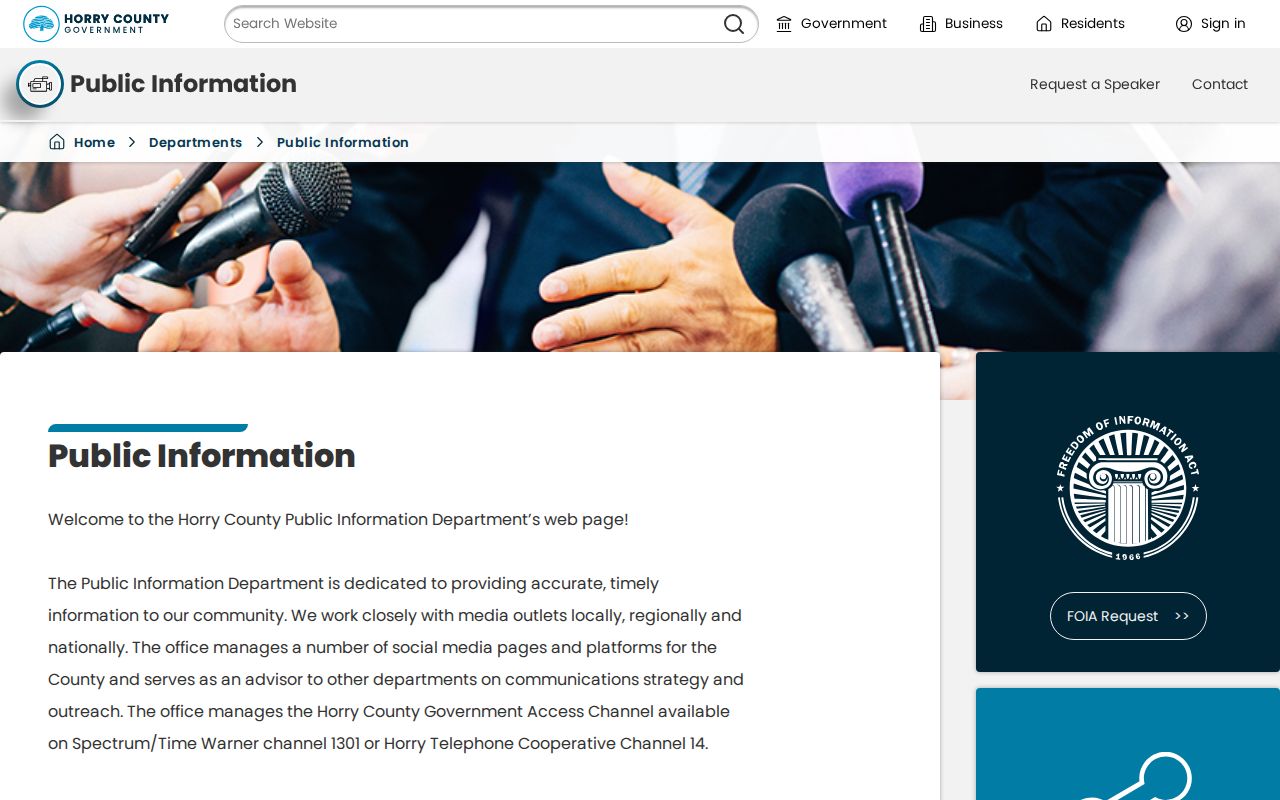
Send a precise record type, address or parcel identifier, date range, and requested format to the custodian, rather than asking for a broad person search.
Historical Carolina Forest Resident Directories
Carolina Forest’s historical trail begins before the community itself. Its planned development dates to the late 1990s, following a 1997 development agreement. A current address may not exist in a 1940 census or a 1970 directory. In that situation, work backward from the current parcel, legal description, lot, subdivision plat, and earlier owner. Then identify the rural place or nearby Conway or Myrtle Beach context that existed before the present development.
The securely documented nearby directory leads are Hill Directory Company’s Conway City Directory, 1959 through 1973, and a Hill Myrtle Beach City Directory cited for 1959. They are contextual collections, not Carolina Forest rosters and not proof of an address within the later community. HCML advises researchers through its local-history resources, and the Thompson Heritage and Research Library opened in Conway in 2025 to strengthen system research access. Confirm an individual volume, its current location, and any in-library access rule before traveling.
The Horry County library system is the first local referral point for Carolina Forest directory and genealogy questions.

Library staff can direct a question to the Carolina Forest branch, another HCML location, or the Conway research library without promising that every item sits on one shelf.
Use Carolina Forest Vital Records Limits
South Carolina Department of Public Health records have statutory eligibility rules. DPH holds state births and deaths from 1915 forward, marriage certificates for marriages from July 1950 through December 2023, and divorce reports from July 1962 through December 2023. The divorce report is not the court decree. Horry Probate Court is the local marriage-license route, while the Horry Clerk holds the divorce case file. The person requesting a certified record must fit the statutory category for that record type.
For family history, the public-duration rules, historical newspapers, cemetery material, probate, and archives are often a more suitable first route than an ineligible certified request. Birth records become publicly viewable photographically after 100 years. Death records become public after 50 years. A name match still needs event-place, date, spouse, parent, obituary, probate, property, or census context.
The South Carolina DPH vital-records hub lists the official request channels and record categories.
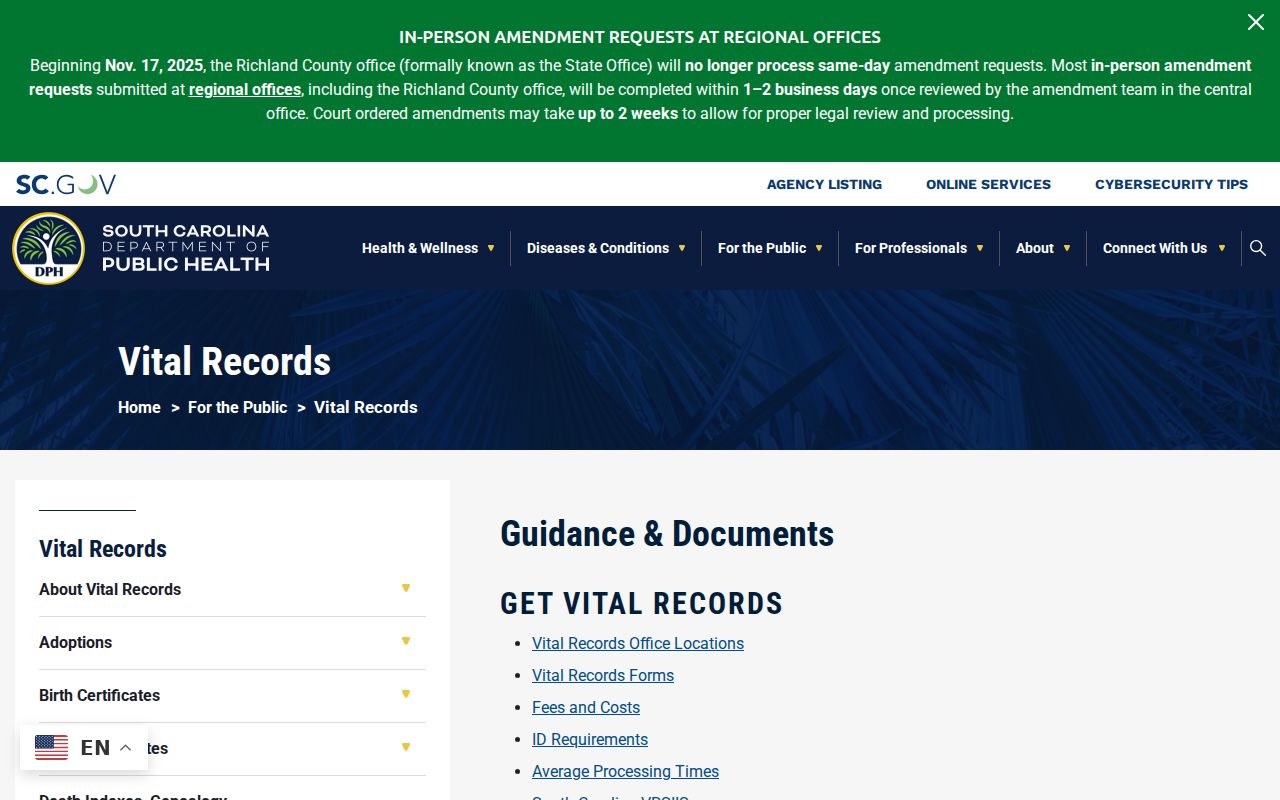
Follow the DPH route for an eligible request and the Clerk or Probate route for the local document that DPH does not hold.
Find Carolina Forest History Beyond Directories
When a directory year is missing, Horry’s historical collections offer other carefully limited leads. The Horry County Archives Center at Coastal Carolina University holds 266 microfilm rolls of historic land documents, including colonial land grants and plats. It also maintains regional materials through the Waccamaw Collection. The Horry County Historical Society’s searchable historic newspapers contain material after 1815, while HCML points researchers to historic newspapers, FamilySearch, HeritageQuest, the Museum, and local repositories.
Those sources are especially useful when a present Carolina Forest address did not exist. A land grant or plat can help trace the pre-development parcel. A dated newspaper notice, obituary, cemetery entry, or oral history can suggest an era or relationship. It does not prove a present address or current household. Compare it with a recorded document, probate file, cemetery record, or census record before treating it as a person match.
The Horry County Register of Deeds is the office source behind this historical Carolina Forest residents directory image and modern land-record route.
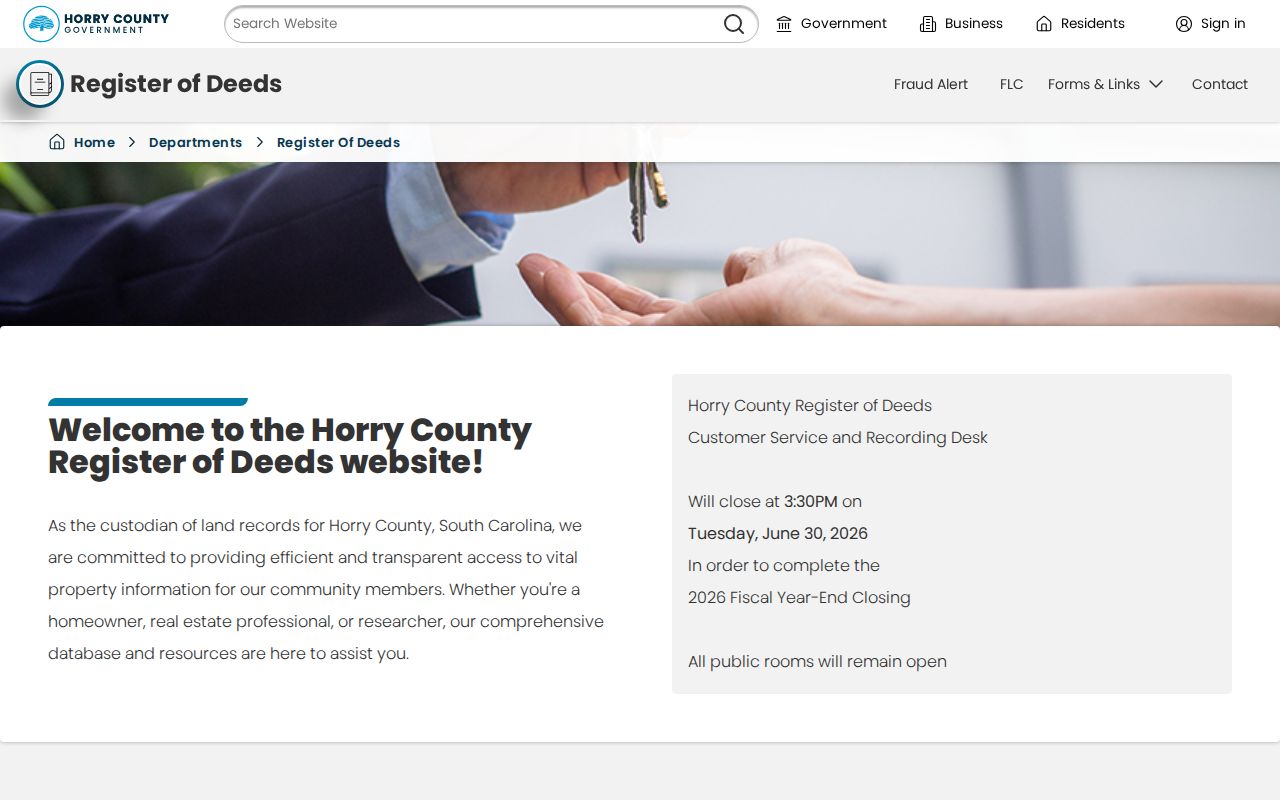
The Register of Deeds office is a practical bridge between a modern parcel question and the older legal-description trail.
Protect Carolina Forest Residents and Records
Public availability is not permission to profile, target, or contact a person. South Carolina’s Address Confidentiality Program can provide eligible participants with a substitute address, and protected or redacted information must not be pursued through another channel. The Family Privacy Protection Act also limits certain uses of personal information from public bodies. A missing address, a sealed court entry, or a restricted vital record should lead back to the custodian, not to speculation.
The South Carolina FOIA code chapter is part of the legal framework, but specific custodians and statutes still control restricted files.
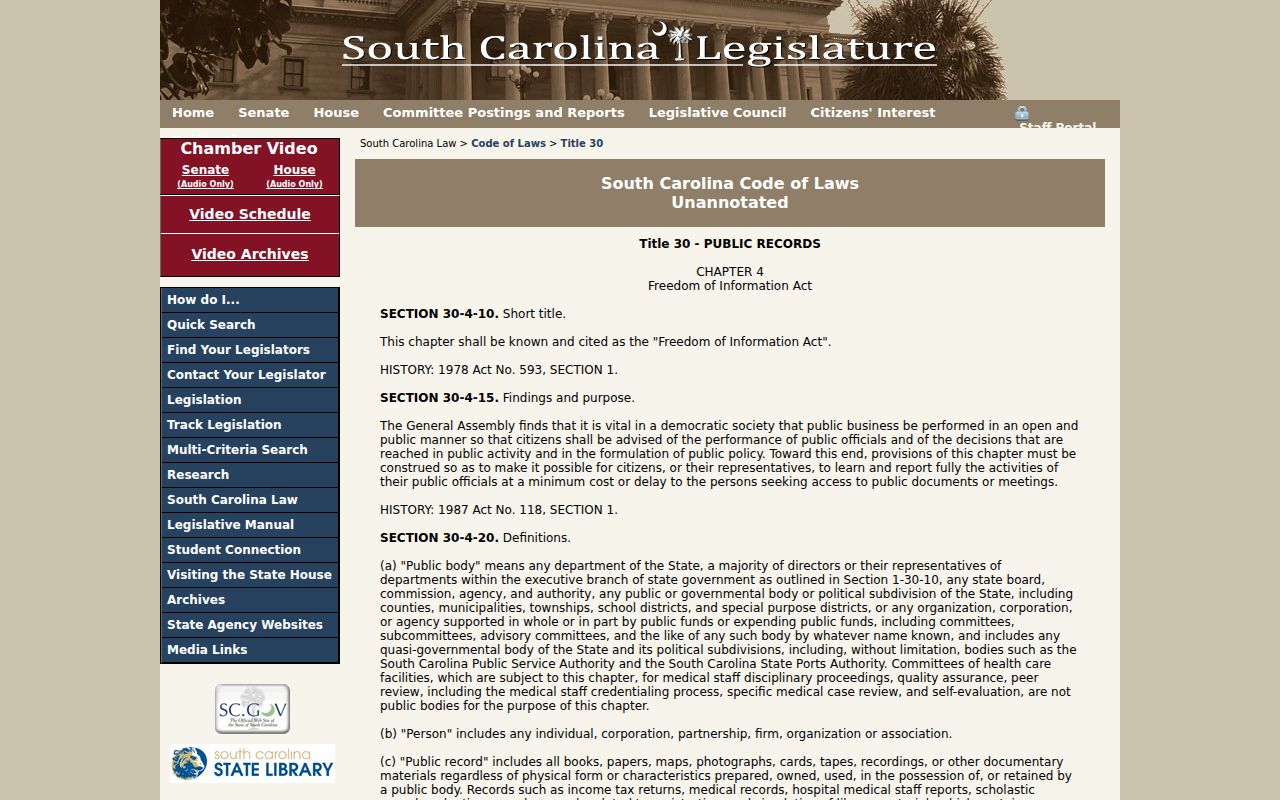
Confirm a record directly with its custodian before relying on it for a personal decision or historical conclusion.