
Carolina Forest City Directory Collections and Limits
Carolina Forest has no incorporated city office or verified historic directory series of its own. It was developed as a master-planned Horry County community in the late 1990s, after the period covered by the nearby printed volumes documented in this research. The practical collection shelf therefore starts with nearby Conway and Myrtle Beach material, then moves outward to newspapers, land records, census schedules, and archives. The entries below are collection leads, not a claim that every volume is online, on one shelf, or searchable by address.
| Collection | Years | Where Held | Access |
|---|---|---|---|
| Hill's Conway City Directory | 1959-1973 documented | Conway Branch / HCML lead in historical documentation | Confirm each volume with HCML |
| Hill's Myrtle Beach City Directory | 1959 documented | National Park Service historical-document citation | Verified title and year, not a complete run |
| Historic American Newspapers | 1777-1963 resource range | Horry County Memorial Library resource gateway | Coverage and title access vary |
| HCHS historic newspapers | Material after 1815 | Horry County Historical Society | Free searchable collection; corroborate results |
| HCAC historic land microfilm | Historic grants and plats | Horry County Archives Center | Research-room collection |
There is no verified Carolina Forest printed run, reverse-directory range, telephone-book range, or local digitized sample entry in the research. A missing year may mean the item is elsewhere, not that a household was absent. Ask a custodian about a particular title and year before treating a catalog lead as a complete record set.
Why a Carolina Forest City Directory Starts Before the Community
The key historical limitation is also the best starting clue. The current community grew from a 1997 development agreement and late-1990s construction, so a present subdivision address cannot be expected in a nineteenth-century volume or an early twentieth-century census. For a family question tied to a current lot, work back from the parcel's legal description, subdivision plat, prior owner, rural road, or nearby locality. This avoids forcing an old Conway or Myrtle Beach listing onto land that had not yet become Carolina Forest.
Horry County's planning descriptions identify a broad planned area with major subdivisions, not a historical city boundary. Older records may use a different road name, rural place, legal description, or county context. The Street Directory explains the current address-to-parcel path; use that stable parcel information before selecting an older local volume. No authoritative Carolina Forest street-renumbering project or historical local-directory ending date was found, and neither should be assumed.
Documented timeline. Hill's Myrtle Beach title is documented for 1959; Hill's Conway volumes are documented for 1959-1973; the Carolina Forest development agreement dates to 1997; Thompson Heritage and Research Library opened in 2025.
The Hill's Conway City Directory Lead, 1959 to 1973
An SCDAH historic-resource bibliography reports Hill Directory Company's Conway City Directory for 1959 through 1973 at the Conway Branch / Horry County Public Library. That makes it a strong, dated lead for a household connected to Conway, not a directory of later Carolina Forest residents. Record the exact year and publisher when requesting a volume, then test whether the person's known location and date actually fit Conway.
Horry County Memorial Library's adult resources point researchers toward genealogy and local-history paths that can help determine whether a library inquiry, a released census schedule, or an archive referral is the next best step.

The resource gateway is useful for identifying an access route, but it does not establish that a particular Hill's volume is digitized or stocked at the Carolina Forest branch. Preserve a catalog response or staff confirmation with the research notes.
Finding Carolina Forest City Directory Leads Through HCML
Carolina Forest Library, at 2250 Carolina Forest Boulevard in Myrtle Beach, is a Horry County Memorial Library branch and a practical place to start a referral. Its listed phone number is 843-915-5282. Ask staff whether a title is at that branch, another HCML location, the library's research collection, or available only through a named database. This question is more productive than asking for a generic person search because the documented evidence is collection-specific.
HCML announced the Thompson Heritage and Research Library in Conway on January 30, 2025. It is the clearest system referral when a branch catalog search does not settle a historical or genealogical question. Exact hours, shelf locations, subscriptions, and volume runs were not verified here, so confirm those details with the library rather than relying on an old listing.
HCML Local History describes the local-history and genealogy referral route.
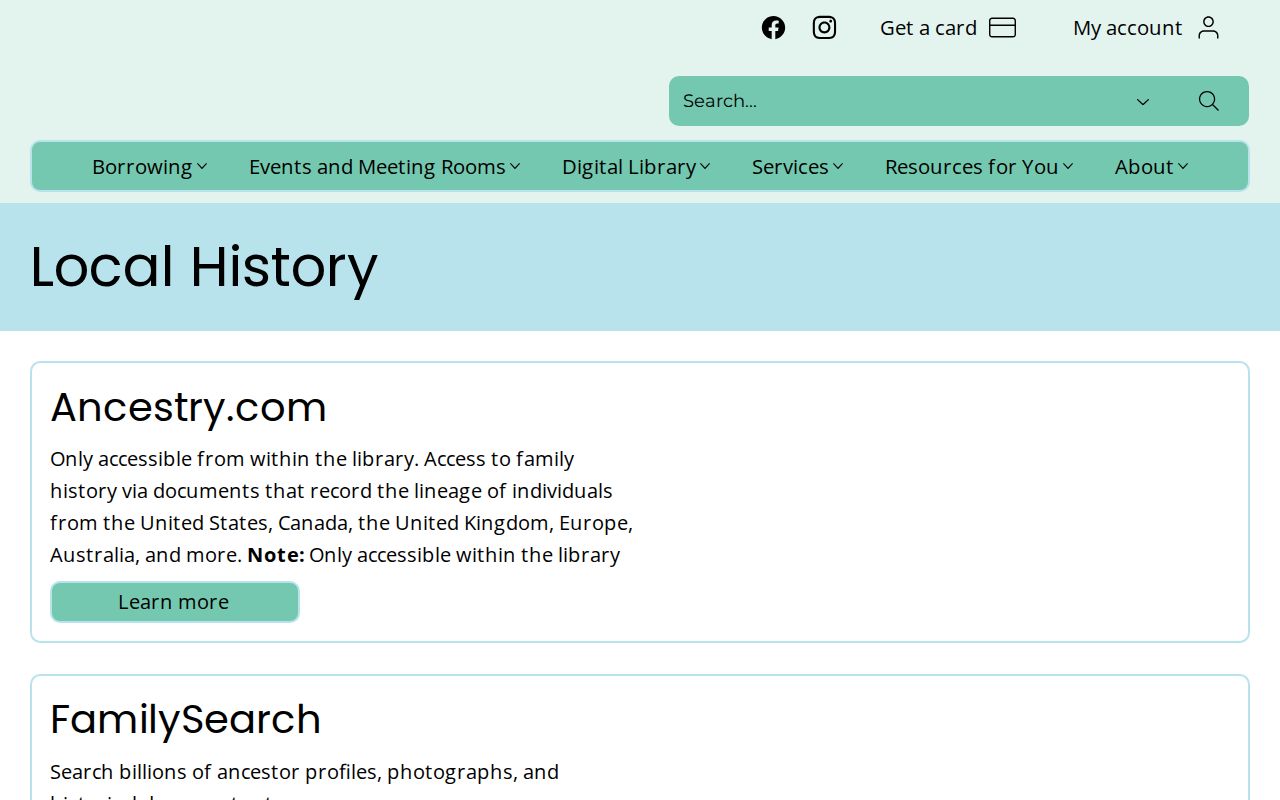
A library response can direct a reader to FamilySearch, HeritageQuest, historic newspapers, HCAC, HCHS, or the museum. Database access and title availability can change, so note whether the suggested source is remote, library-only, or a separate repository visit.
Carolina Forest Historical Context in HCAC's 266 Land Rolls
The Horry County Archives Center at Coastal Carolina University is the documented older-land fallback when a modern address does not exist in the expected era. HCAC holds 266 microfilm rolls of historic land documents, including colonial land grants and plats, and serves Horry plus five surrounding counties from the former Georgetown Judicial District. Those rolls can help tie a current parcel's legal description to a predecessor tract or locality before a household search moves into directories or census material.
HCAC's Digital Commons collection gateway also leads to oral histories, photographs, Hurricane Hazel material, archaeology reports, Fleming photographs, and Independent Republic Quarterly.
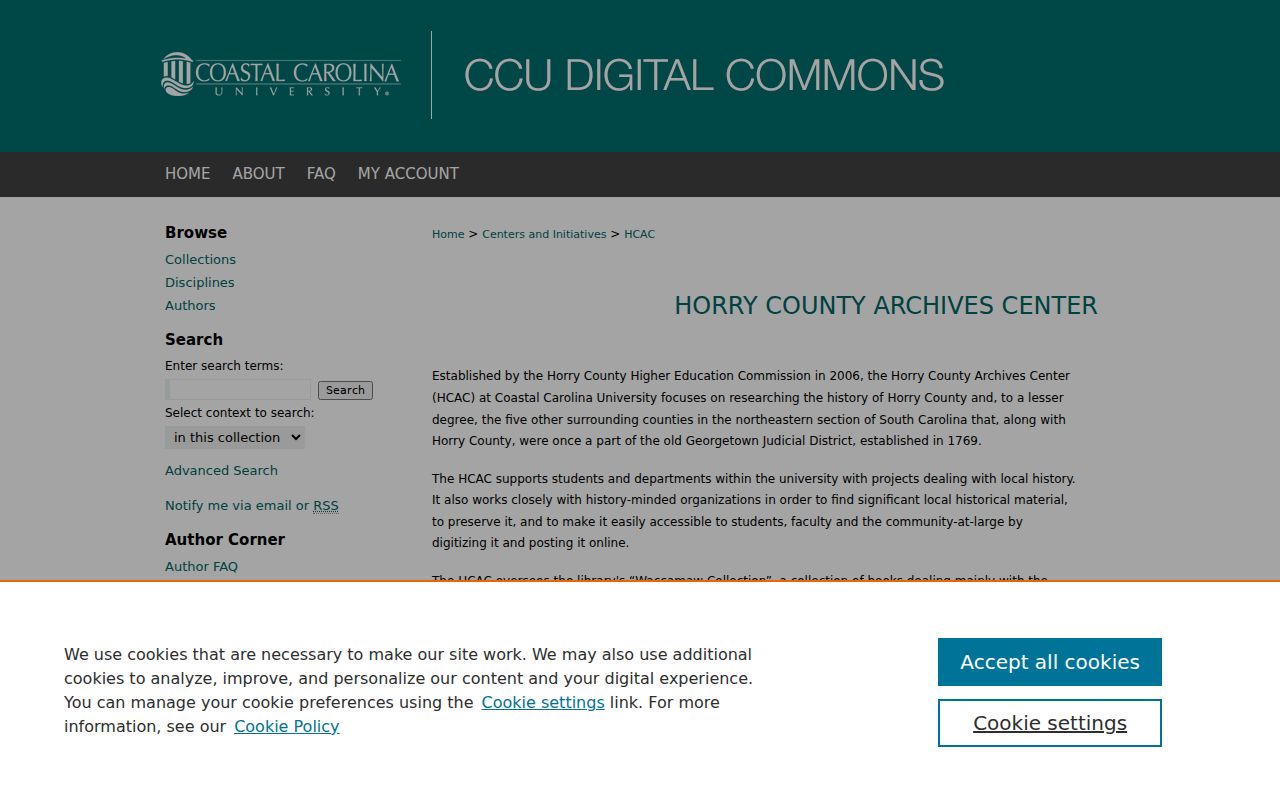
HCAC's oral-history project includes more than 100 interviews from 1964 to 2006, but an oral-history mention is context or a name lead, not proof that someone lived at a particular address. Keep the collection item, date, and any matching primary record together.
Reading a Carolina Forest City Directory Entry with Care
No authoritative digitized local sample entry was captured, so a reader should not presume a Horry volume uses a particular abbreviation, ownership mark, or criss-cross section. When HCML or HCAC makes a volume available, transcribe what that volume actually prints. Photograph or note its title page and legend before interpreting an initial, symbol, or shorthand.
| Volume identity | Record the title, year, publisher, and page before extracting a name. |
|---|---|
| Name as printed | Keep spelling, initials, suffixes, and any former-name clue exactly as shown. |
| Address | Capture the street or rural-place wording, then compare it with the period's locality and the land trail. |
| Family clue | Copy a spouse or widow notation only if the volume prints it. |
| Occupation clue | Transcribe it only when shown and keep it as a dated clue rather than an identity conclusion. |
| Marks and legend | Copy any symbol or abbreviation key from that same volume; none is verified here in advance. |
- Criss-cross directory
- A reverse, street-order listing when a particular volume includes one. No local year range was verified, so ask to inspect the volume rather than assuming it exists.
- Householder index
- A name-based finding aid or list for the people represented in a volume. Its scope depends on the publisher and year.
- Abbreviation key
- The volume's own explanation of its shorthand. It should be copied with the entry because symbols can change between publishers or editions.
Horry Newspapers Between Carolina Forest City Directory Years
When a volume gap remains, historical newspapers can add a date, place, obituary, probate-sale notice, property transfer, or social reference. Horry County Historical Society describes its historic newspaper collection as freely searchable and containing material after 1815. The result is a lead, not a substitute for a deed, probate file, cemetery record, or other underlying evidence. Save the headline, publication, date, page, and URL before seeking corroboration.
Horry County Historical Society collections include historical newspapers, photographs, oral histories, family-genealogy material, markers, and Independent Republic Quarterly.
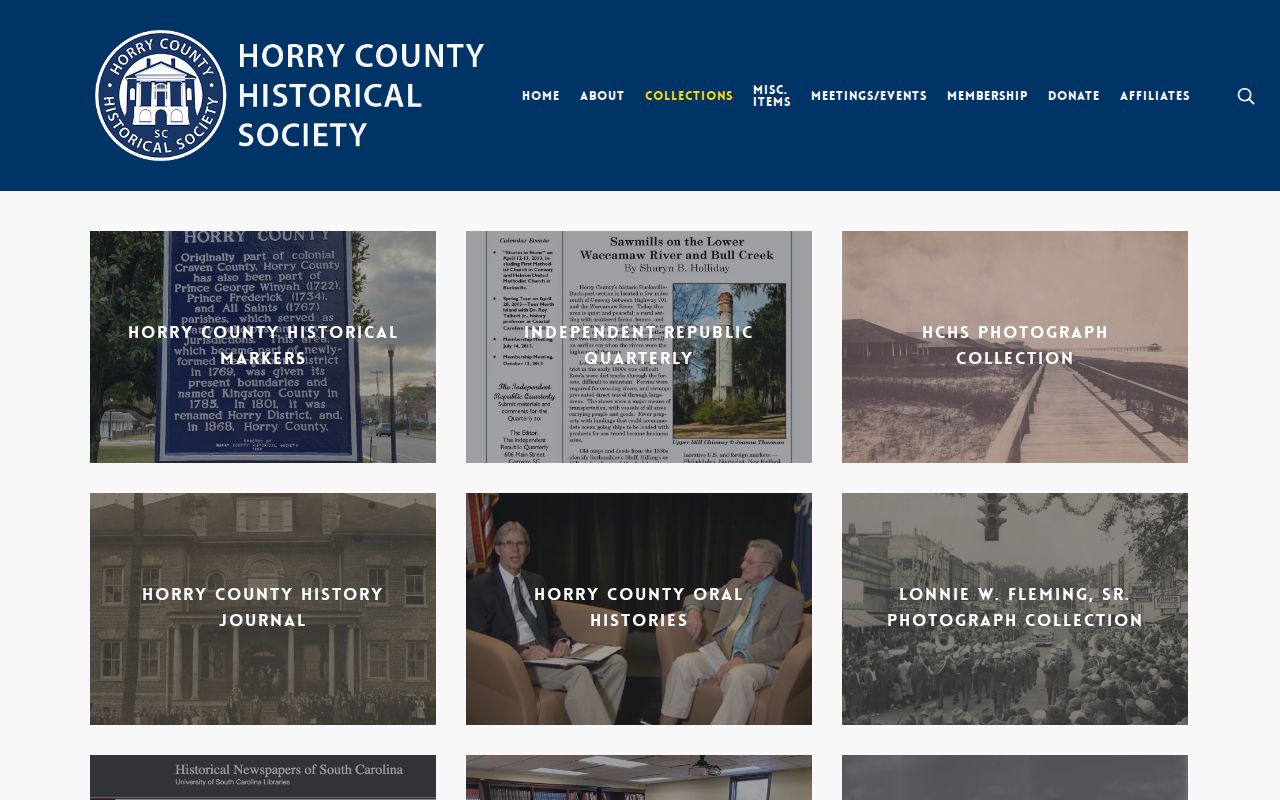
Newspaper context is especially useful for an earlier Horry household, yet it cannot turn a nearby-city mention into proof of a Carolina Forest residence. Match the date and locality to parcel, probate, cemetery, or census evidence before closing a family trail.
Tracing a Household with Carolina Forest City Directories
A sound household trail moves from a known place to the historical locality that existed at the relevant date. This sequence works because it uses each source for the narrow question it can answer, instead of treating one listing as a complete biography.
- Start with the present parcel, legal description, subdivision clues, and recorded deed chain to establish the property's pre-development trail.
- Choose the earlier Conway, Myrtle Beach, rural-Horry, or other locality that fits the person and date, then ask HCML or Thompson Library about the exact volume.
- Transcribe the volume's title, year, page, name spelling, address, and any printed family or occupation clue.
- Compare adjacent available volumes for a move or changed notation, but do not infer the reason for a disappearance from a listing alone.
- Pair the dated entry with an appropriate released federal census, a recorded land document, historical newspaper item, cemetery result, probate file, or obituary.
Federal census schedules are released on a 72-year interval, so they reconstruct historical households rather than current ones. The Horry Cemetery Project, begun in 2007, can add countywide names, birth and death dates, symbols, grave condition, and mapped cemetery context where inventoried. It is a useful family-history channel, not an address roster.
Carolina Forest City Directory Research Beyond the Local Shelf
South Carolina Department of Archives and History is the statewide archival path when a question extends beyond the library catalog or a current county index. Its repository guidance identifies HCAC as a local historical partner, while the Register of Deeds remains the modern recorded-document custodian. Take the legal description, former owner, book and page or instrument reference to an archive inquiry so staff can connect the request to a defined tract or record series.
SCDAH online research is the official starting point for state archival catalogs and historical research routes.
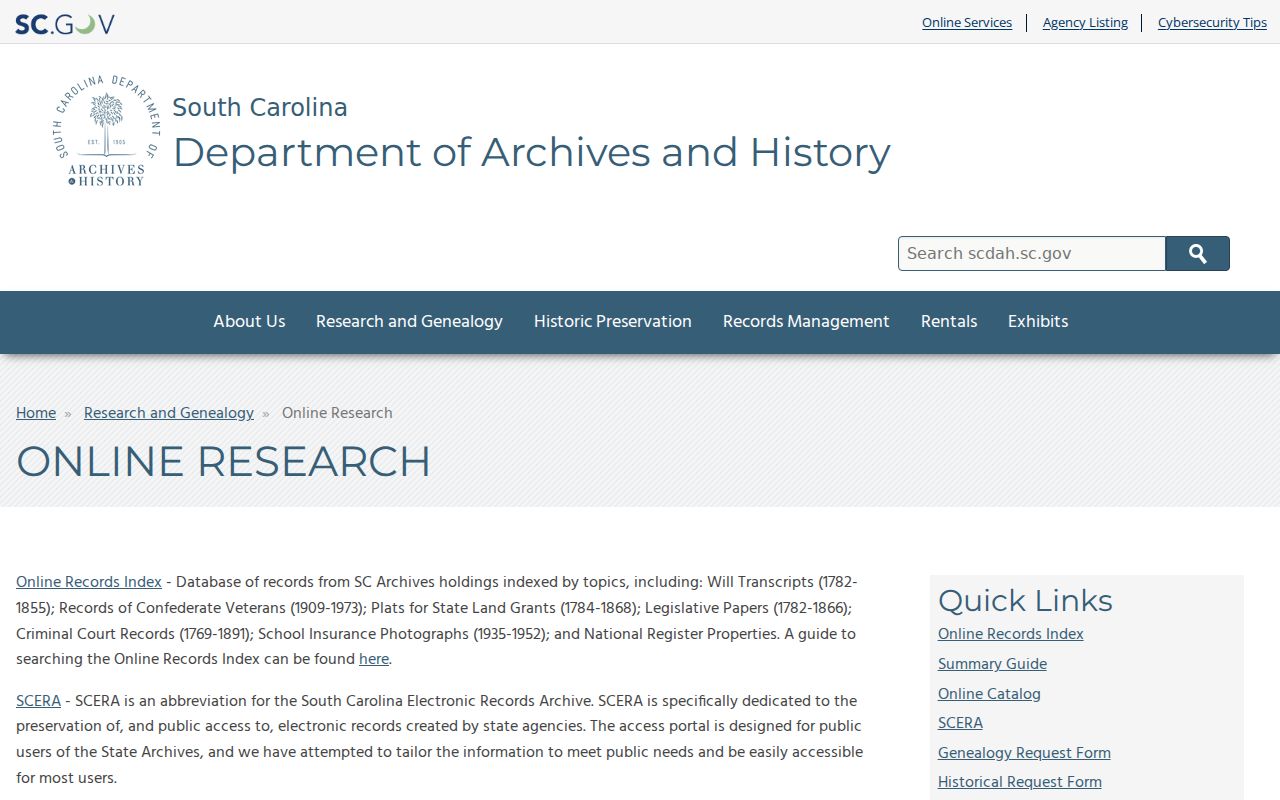
The archive path is most useful when an early land description, grant, plat, or former jurisdiction explains why the current community label vanishes from old material. It does not support inventing a Carolina Forest municipal archive, city clerk, or older local directory series.